David Webb & Julia Anna Cone’s family
Milo Cone Webb
1844–1936
From army camps to a store in Sedan, Kansas, and a ranch in Arizona’s Tonto Basin, Milo’s life survives in letters, local newspapers, and the story his son told of growing up on the range.
A soldier’s letters
Cone’s account gives his father’s birth as February 14, 1844, in Akron, Ohio, and says that Milo enlisted from Rockford, Illinois, as a teenager. The University of Michigan’s Bentley Historical Library identifies Milo C. Webb as a Civil War correspondent of Charles Butler. The surviving copies preserve Milo’s own voice; the manuscript guide catalogs the correspondence together with letters from several other writers, including Edson Woodman of Paw Paw. [2] [5]
In March 1863, writing from a camp above Lake Providence, Louisiana, Milo described flooding and the swift current in a newly opened canal; he also described viewing Vicksburg through a telescope from across the river. He signed with Company D, 11th Illinois Volunteer Infantry. The Illinois roster transcription likewise lists him as a private in Company D.
In November 1863, writing from Vicksburg, he said he was still serving as a brigade orderly and carried his commander’s orders between regiments during a drill. In April 1864, from brigade headquarters, he advised Butler against enlisting underage without parental consent and recalled talking with Confederate pickets beyond the Big Black River under a truce. The letters document his orderly duties; they do not identify him as Grant’s personal aide. [2]
Cone later described his father as an aide to Ulysses S. Grant and attributed amputated toes and a lifetime pension to frostbite during his service. Those details come from a son writing decades later. The extent of any duty for Grant and the nature and date of the injury remain unverified; the Arizona Historical Society finding aid lists pension records to check. [5] [8]
A store in Sedan, Kansas
After the war, Milo farmed in Kansas and went into general merchandise in Sedan. Cone remembered a business with a partner and farmers paying bills in produce and cattle. A cousin’s 1947 letter, reproduced in the account, named the partner as J. I. Crouse and dated Milo’s arrival from Marshall County to about 1873 or 1874. [5]
The family account says the Sedan business passed to Milo’s father, David Webb. The February 21, 1879, Chautauqua Journal records a specific transaction: a local item said Milo sold his stock of goods to his father David, and Milo’s signed notice confirmed disposal of his entire merchandise stock to David and asked customers to settle their accounts. David’s advertisement the next month offered spring merchandise in Sedan. The notices establish the stock sale and the father–son relationship, not a transfer of the building or a permanent departure from retail. [3]
In November 1880 the same paper carried an advertisement under M. C. Webb’s name for boots, shoes, dry goods and holiday merchandise. The June 17, 1881, Sedan Times-Star listed M. C. Webb on the Fourth of July finance committee and, in a separate item, reported that David and his wife were leaving for a summer visit to their children and friends in Illinois and Wisconsin. We do not yet know the terms under which Milo resumed or continued trading. [4]
From Kansas to Tonto Basin
Cone described his father scouting Arizona in 1883 and assembling 360 heifers for an overland drive. He recalled a covered wagon pulled by oxen, a stop on Turkey Creek, and the eventual move down to Tonto Creek. The same account preserves a cousin’s recollections of a drive written more than sixty years later. The account distinguishes more than one trip; its dates and the herd count are reported recollections, not a verified itinerary. [5]
Cone remembered joining his father with the family in 1890. He credited Milo with starting the TV cattle brand, opening a store supplied by pack trains, and helping reopen a local school. Cone later described forming the Tonto Basin Cattle Company in 1911 with Milo, his brother Jay and the Armer brothers. The Arizona Historical Society identifies surviving brand registrations, land papers and company records; the finding aid lists them but does not establish their detailed contents. [5] [8]
Ella Webb, the Cline post office, and civic life
Cone remembered the Cline post office occupying the largest room in the family home and his mother, Ella, serving as postmaster. Northern Arizona University’s index to the December 31, 1891, Coconino Weekly Sun identifies the new Tonto office as Cline and the postmistress as Mrs. M. C. Webb. The federal Official Register independently lists E. E. Webb there in 1893 and Ella E. Webb in 1903. It lists Ora Martin by July 1905. These sources distinguish Ella, the postmaster, from Milo, whom later accounts credit with helping establish the office. Cone recalled that Ella held the office until she moved to Phoenix in 1912, but the 1905 register names a successor. The exact appointment and handoff dates remain open. [6]
In 1906 two Globe newspaper notices name Milo as an election inspector in the Roosevelt precinct. The December claims list shows a $5 allowance after the November election. That is a documented civic role, separate from Cone’s recollections about the school. The Arizona Historical Society also lists Ella’s 1901 school district attendance report. [7] [8]
Burial and questions still open
Cone wrote that Ella died in 1920 and Milo in 1936 and that both were buried at Greenwood Memorial Cemetery in Phoenix. Milo’s photographed marker gives the years 1844 and 1936, not the exact dates. This archive leaves the exact day of death open pending a death record or contemporary notice. [5] [9]
Sources and how to read them
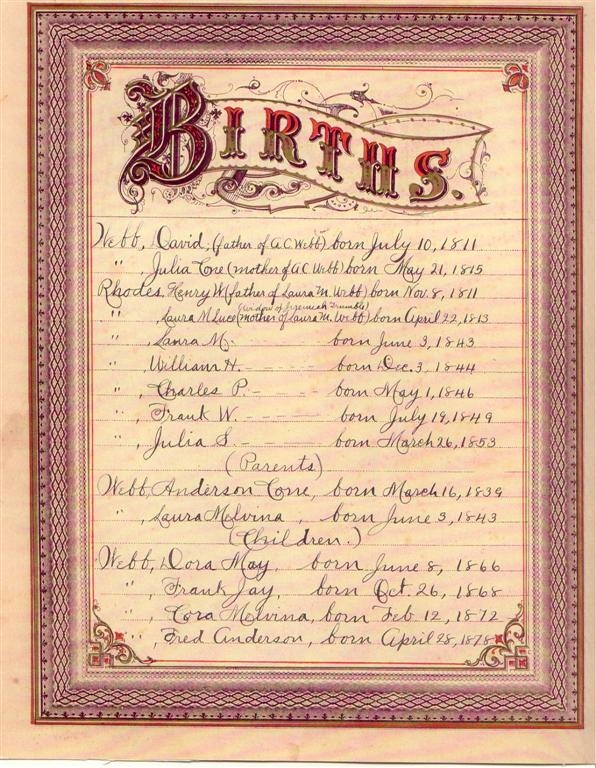
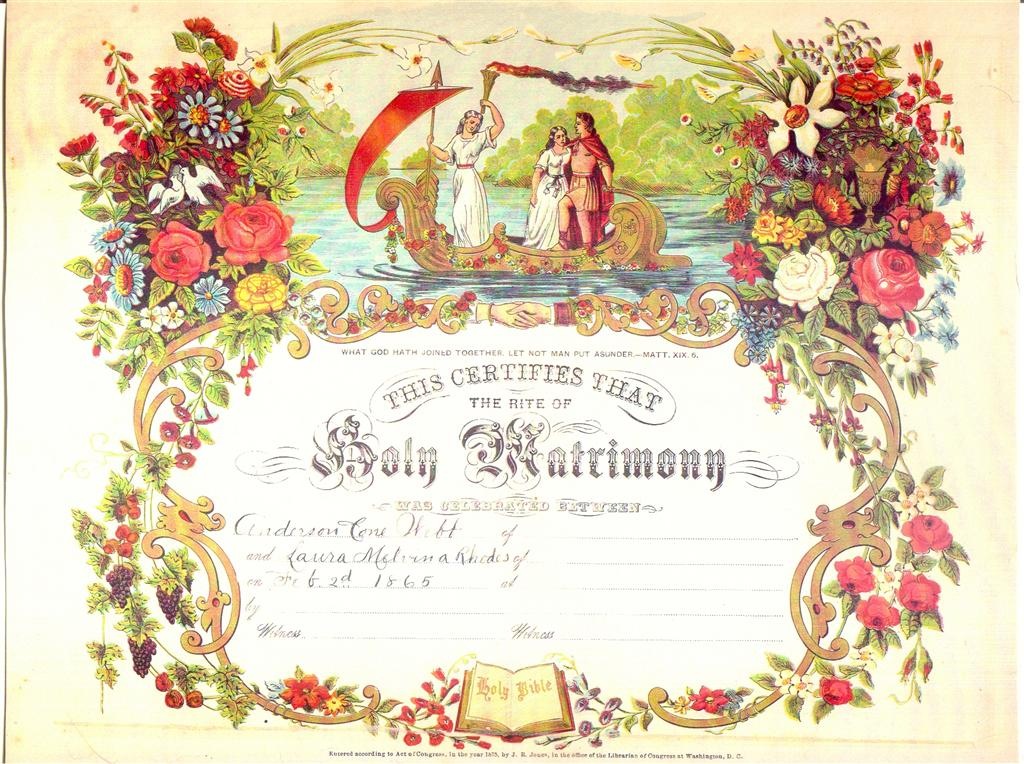
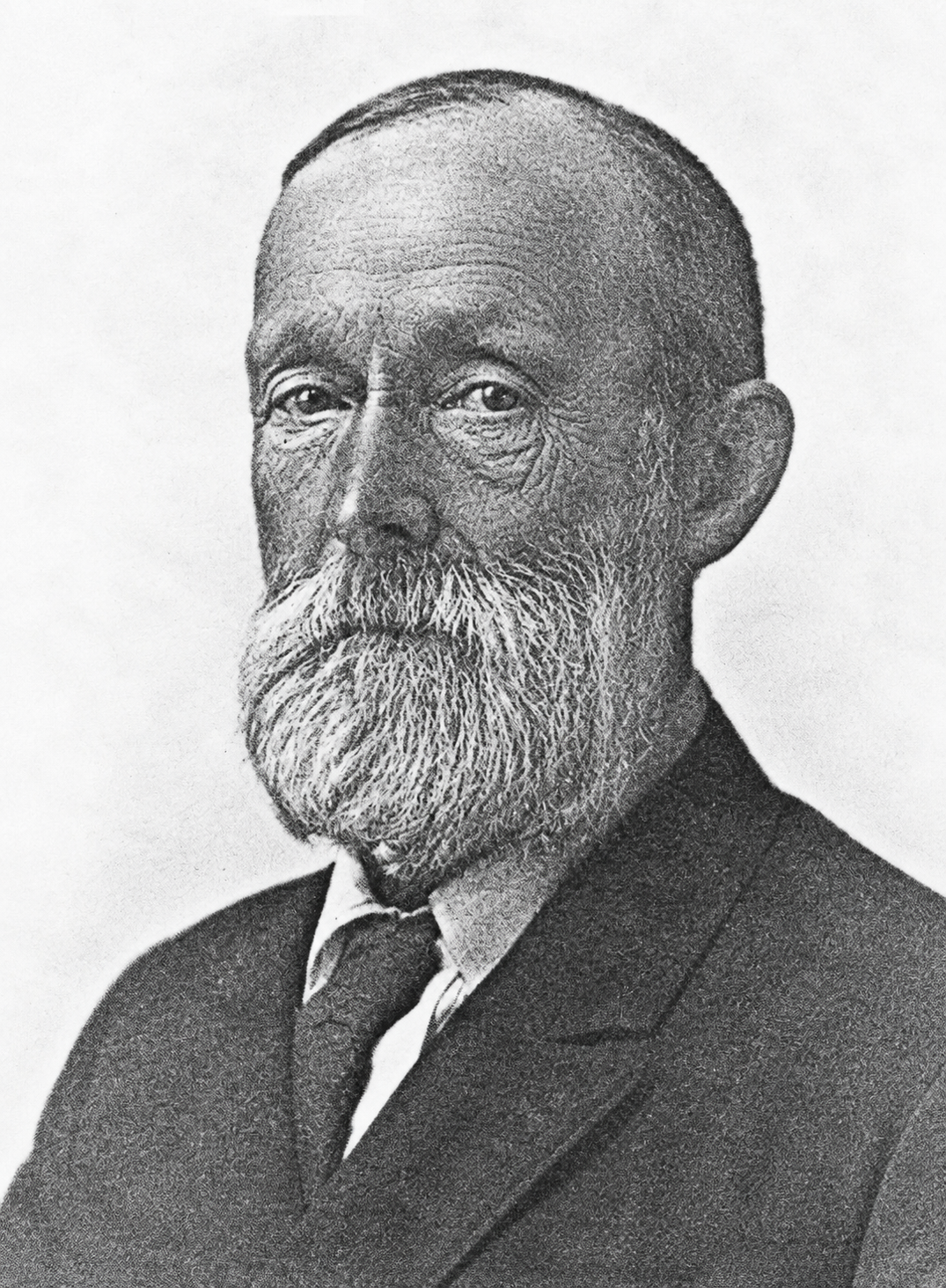
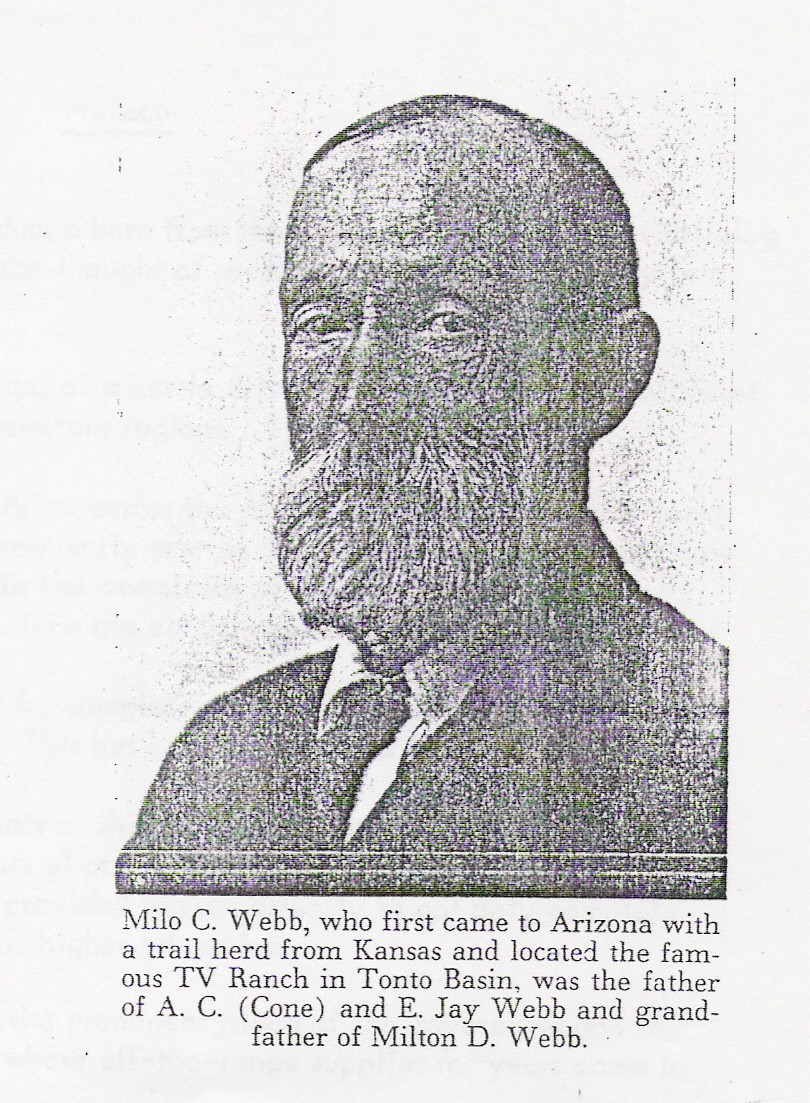
- Donald Webb, James Webb Family, printed p. 10, compiled family history; Anderson Webb Bible birth register and marriage page. Portrait identification comes from the caption preserved with the original family photograph.
- Bentley Historical Library, University of Michigan, Guide to Manuscripts in the Michigan Historical Collections, printed p. 24, entry 285, Charles Butler correspondence, 1862–64, 13 items, copies of originals. Family PDF of the correspondence copies: Milo to Butler, March 25, 1863, pp. 3–4; November 14, 1863, pp. 5–6; April 3, 1864, p. 7. The entry describes the whole collection, not 13 letters from Milo.
- Chautauqua Journal (Sedan), February 21, 1879, p. 3, local item in column 2, M. C. Webb’s signed notice in column 4, and D. Webb’s advertisement; March 28, 1879, p. 3, D. Webb’s spring advertisement in the rightmost column. Newspaper image links may require a subscription.
- Chautauqua Journal, November 12, 1880, p. 3, M. C. Webb’s advertisement in column 6; Sedan Times-Star, June 17, 1881, p. 3, David Webb local item in column 2 and Fourth of July committee notice in column 4.
- Anderson Cone (A. C.) Webb, The Webb Story, first published in three issues of Arizona Cattlelog; consolidated reprint with preface dated July 1, 1958. Part I covers Sedan, the drives, the 1890 move and Cline post office; Parts II and III cover ranching and education. The closing biographical note appears on Part B, PDF p. 10 of the family copy. These are family recollections, not contemporary vital or military records.
- Northern Arizona University, subject index to the Coconino Weekly Sun, December 31, 1891, p. 2, col. 3 (index entry; original page not read); U.S. Official Register, vol. II, Cline, Gila County, Arizona Territory: 1893, p. 512; 1903, p. 41; 1905, p. 38.
- Arizona Silver Belt, July 26, 1906, p. 3, election appointees, Roosevelt precinct; December 2, 1906, p. 5, official claims list, Roosevelt precinct.
- Arizona Historical Society, A. C. Webb Collection finding aid, folders 3, 4 and 8. A locator for official and family papers; the documents themselves are not reproduced here. The society’s Richard Schaus Collection finding aid, FM MSS 6, box 31, folder 77, p. 60, is a separate locator for a Milo Webb photograph. It does not authenticate the family portrait on this page.
- Greenwood Memory Lawn Cemetery, Phoenix, Milo C. Webb memorial and marker photograph. The physical marker shows “Milo C,” “Father,” and the years 1844 and 1936. The memorial and marker are not a substitute for a death certificate.