Woodman family · Paw Paw, Michigan
Edson Woodman

Before he raised Percheron horses at Chestnut Hill Farm, Edson Woodman wrote home from the Civil War. His letters to an old schoolmate follow him from Tennessee to a hospital in Detroit. They also give us a glimpse of the young man who would become Bertha Woodman Webb’s father.
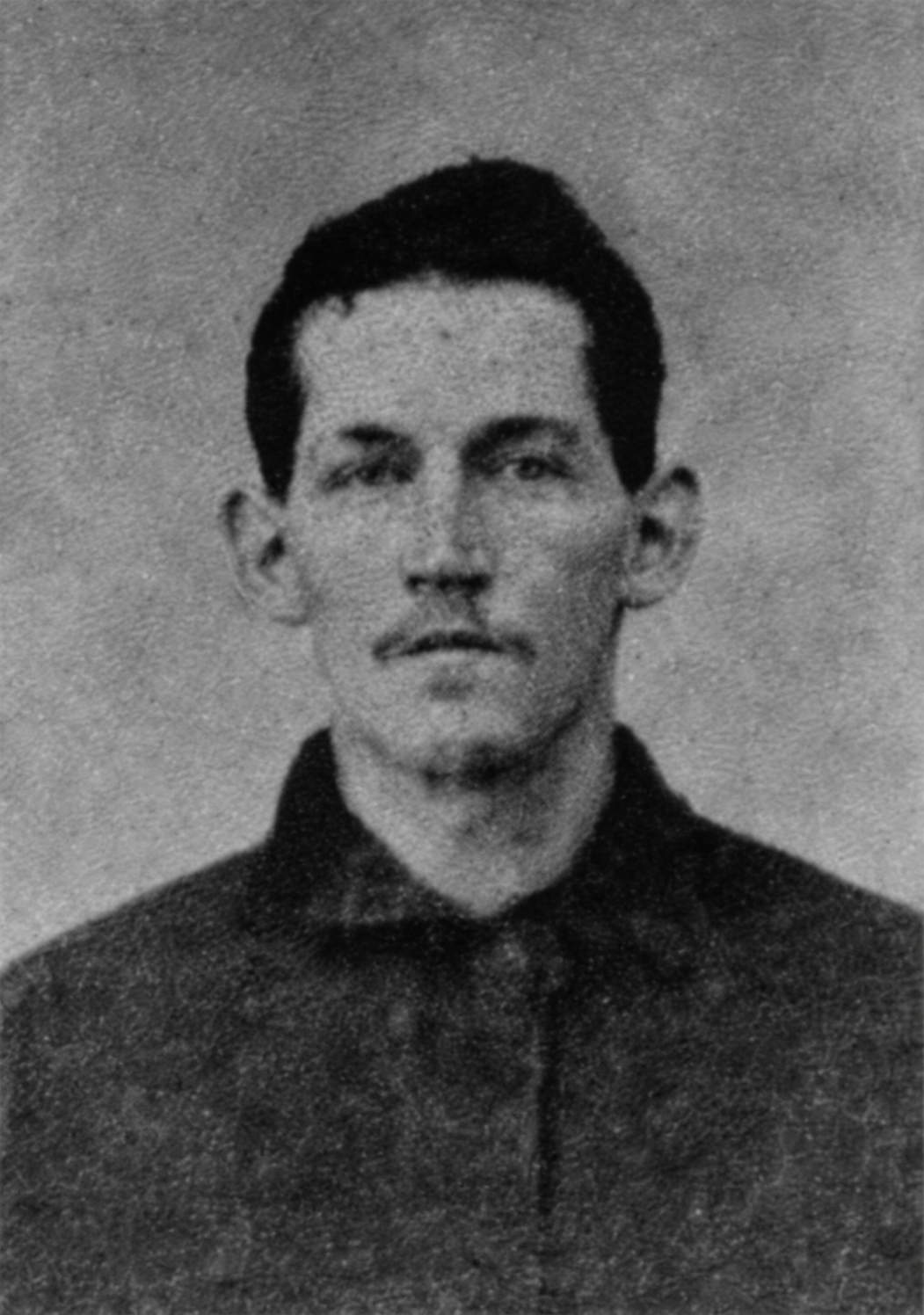
Five letters to Charles Butler
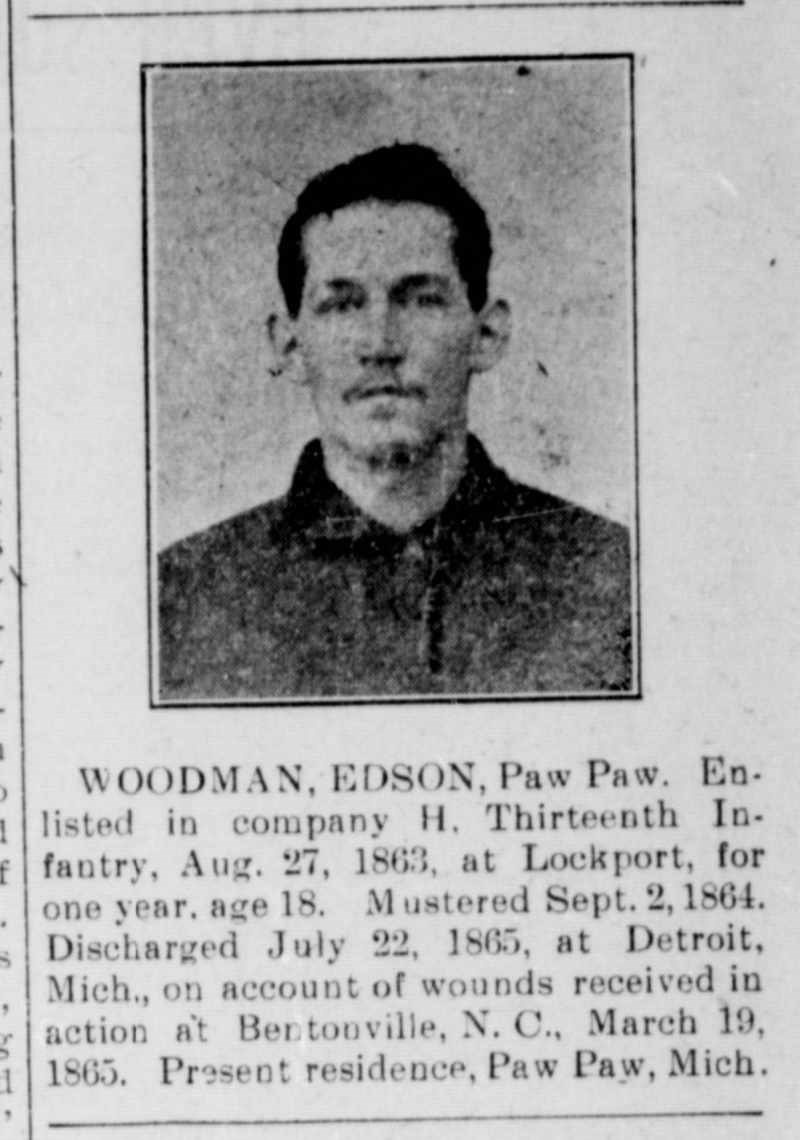
Edson served in Company H, 13th Michigan Infantry. The 1912 county history gives his enlistment as August 27, 1864; the caption accompanying his portrait instead prints August 27, 1863, yet lists his muster on September 2, 1864. His first surviving letter here is dated September 9, 1864. Both printed accounts agree he was wounded at Bentonville, North Carolina, on March 19, 1865, and discharged because of his wounds on July 22. His letters supply the details a roster can’t: what he noticed, what he missed, and how he saw his own recovery. [1] [2]
- September 9, 1864 · Nashville
- After traveling from Jackson through Louisville, he jokes about the bugs in the crowded quarters. He is just as eager to tell Charlie about time spent with Ella in Erie and their carriage outing to Monroe. (Family copy, p. 1.)
- September 15, 1864 · Lookout Mountain
- He recalls a hot, hard climb from Chattanooga and reports a new assignment as headquarters orderly. It came with a tent and a good bed, and his work included carrying orders between officers. (pp. 2–3.)
- February 3, 1865 · Sister’s Ferry
- He has cooled on infantry life and advises Charlie against enlisting. Company H had numbered 109 at Chattanooga, he writes, but now draws rations for 58. That is not a count of the dead. In the same letter he says that “Miss E.G.” is attending college in Lyons, Iowa. The initials make Ella Grace Hall a plausible identification, not a certain one. (p. 4.)
- April 18, 1865 · Fort Schuyler, New York Harbor
- He describes a gunshot through his leg, his hospitalization at Goldsboro, and his first attempts at walking on crutches. Even from his hospital bed he teases Charlie about news from home. (p. 5.)
- May 18, 1865 · St. Mary’s Hospital, Detroit
- Close enough to think about home but not yet discharged, Edson reports that he can put his foot down and is regaining more use of his leg than his doctors had expected. He asks Charlie to answer and signs as his “old schoolmate.” (p. 6.)
Milo Cone Webb also wrote to Charles Butler. Their letters are preserved in copies in the same Bentley collection, though the two men served in different regiments. [2]
Chestnut Hill Farm and the Webb connection
Edson, born in 1847 according to the county history, was a son of David Woodman and Jane Harris. The same history describes his farm next to his father’s and his reputation as a Percheron breeder. The 1912 atlas places Chestnut Hill Farm in section 20 of Paw Paw Township and lists Edson as an importer and breeder of Percheron horses as well as a breeder of Shetland ponies. He bought the imported Percheron stallion Duke of Perche in 1876. The 1912 county history credited the stallion with helping popularize the breed locally. In an 1894 farm paper, he described feeding whole oats to his horses and making do after a poor harvest. [3] [4]
Edson also left a practical account of the farm’s equipment. In a January 27, 1912 letter printed in an August advertisement, he wrote that he had used six cement-stave tanks, ranging from a four-barrel tank in the stallion stall to a fifty-barrel stock tank. He reported that an outdoor tank had frozen solid several times without damage and that he had patched leaks with wet cement. The advertisement prints the farm name as Chestnut Grove Farm, while the 1912 atlas gives Chestnut Hill Farm. Both identify Edson at Paw Paw as a breeder of Percherons and Shetland ponies. [4] [11]
Why Percherons mattered
Named for the Perche region of France, Percherons were draft horses: their value lay in pulling power. Before tractors were common, teams pulled plows and heavy farm machinery. A 1912 farm column recommended the Percheron as an all-around workhorse, and a University of Illinois study of farms in the 1910s found that most of the workhorses it examined in Hancock County were predominantly of Percheron ancestry. [8] [9]
Breeding added another kind of value. In 1900, Michigan Agricultural College professor H. W. Mumford reported strong demand for heavy draft horses. He advised farmers to work well-selected mares on the farm and breed them to heavy stallions, so a marketable colt could help offset the cost of keeping the mare through winter. That helps explain the appeal of a stallion like Edson’s Duke of Perche to local farmers. It does not tell us what Edson charged for stud service or earned from his horses. [4] [10]
Edson and Ella’s family
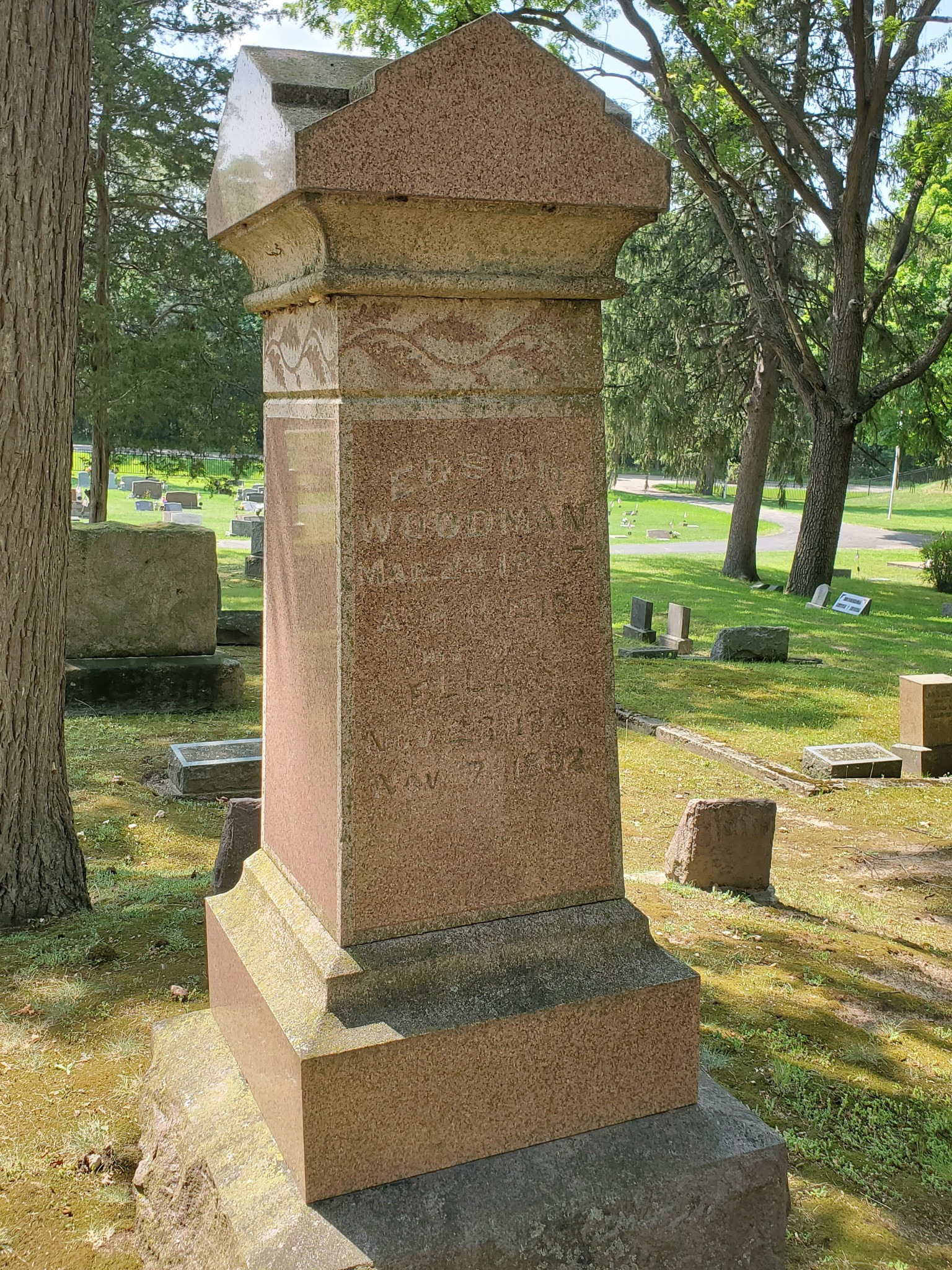
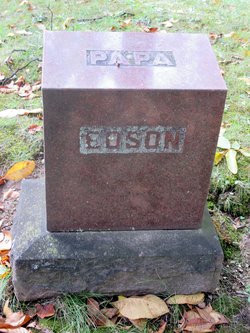
The 1880 census shows Edson and his wife Ella G., identified in the family records as Ella Grace Hall, with Bertha, Emma, Edwin E., and Ella W. Mary’s will names Ella as her daughter. See Nathaniel and Mary Hall for that record, and Nathan Teall’s biography for the earlier Hall line. The little girl Ella W. was Ella Winifred Woodman, the future Arthur Hill High School teacher. On May 31, 1893, Bertha married Frank Jay Webb. Nancy E. Robinson’s transcription of a provision in Edson’s 1910 will says Bertha’s share of the remaining estate was to be held in trust under conditions involving her marriage. In 1917 Bertha sued Clara B. Woodman and others to have the will interpreted. Local court news confirms that the court construed the will, but does not give the terms of the ruling or establish a distribution. A separate 1898 probate order records Bertha’s petition about real estate in her mother Ella’s estate. See the newspaper sources for both proceedings. Edson was buried at Prospect Hill Cemetery in Paw Paw in August 1916. [5] [6]

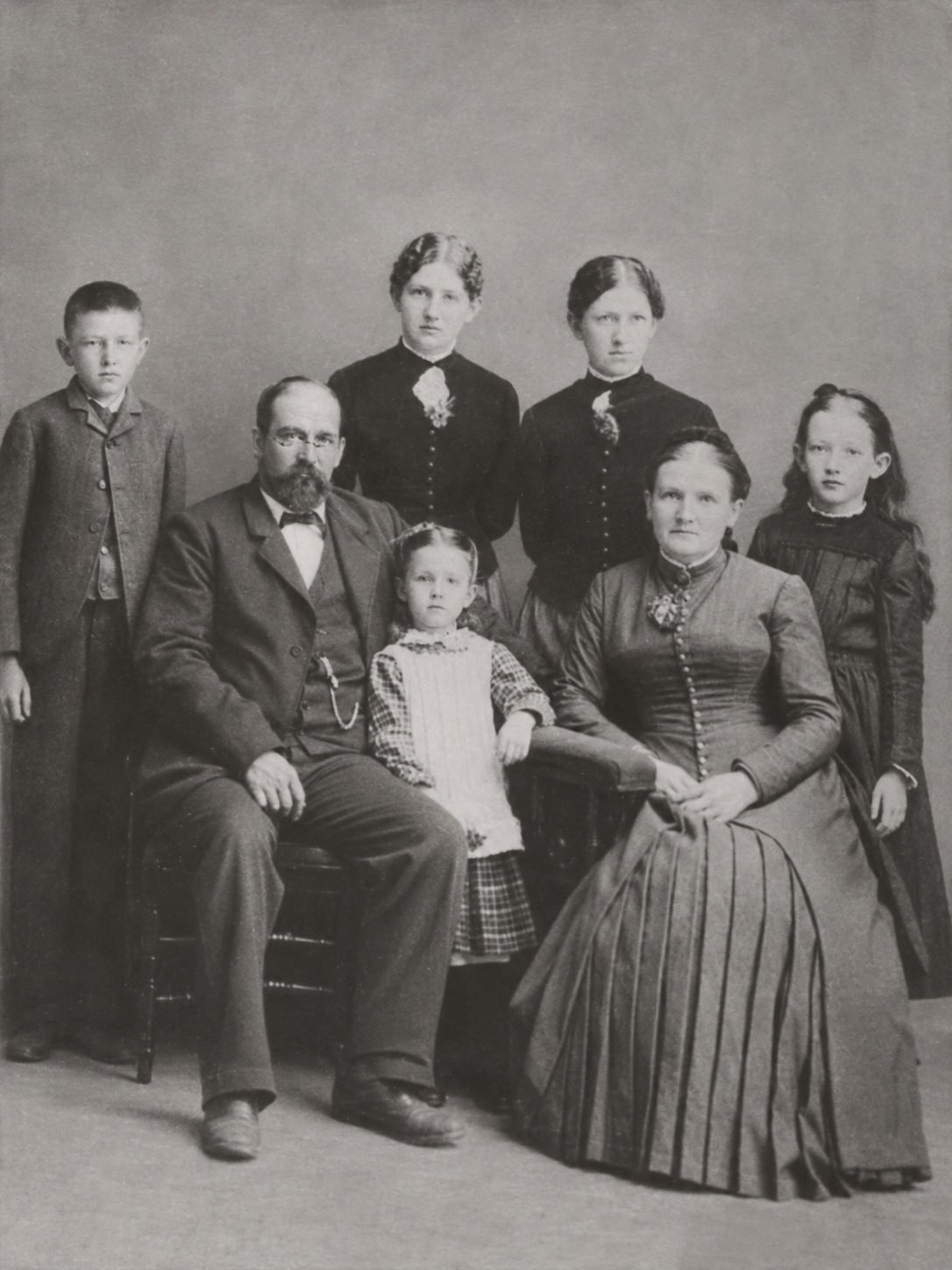
Edson’s younger brother Jason Woodman helped pioneer Michigan’s agricultural extension service.
From New England to Van Buren County
Edson’s older sister Celia Woodman Holtby settled in Bakersfield, California, where her garden drew the attention of a University of California visitor.
- Joseph Woodman (1790–1879) and Tryphena Johnson. Their county biography dates their marriage to January 1, 1810. They lived in Vermont, moved to Riga, Monroe County, New York, in 1831, and settled in Antwerp Township east of Paw Paw in 1835. Joseph was a Free Will Baptist minister.
- David Woodman (1818–1904) and Jane Harris. David was born at Wheelock, Vermont. The 1880 account says he traveled west separately with Joseph Luce’s party, reaching Paw Paw in October 1835; the 1912 history puts David’s arrival in May. David himself recalled starting his farm on the west shore of Three Mile Lake in spring 1839. He married Jane in May 1844.
- Edson Woodman (1847–1916) and Ella Grace Hall. Their daughter Bertha links the Woodman and Webb families.
The 1880 county history names New Hampshire-born Joseph’s father as John Woodman. An 1856 Woodman genealogy goes further: it identifies John’s wife as Sarah Foy and John’s parents as an earlier Joseph Woodman and Bridget Willey. The author is explicit about where the evidence runs out: he was not certain that Bridget’s husband was the Joseph born in 1714, son of Deacon Archelaus Woodman of Newbury, Massachusetts. [3] [7]
The late-1600s lead: Archelaus appears as a son in Edward Woodman Jr.’s 1693 will. That documents a relationship on the Newbury side. It does not establish that the Newbury-born Joseph and Bridget Willey’s husband were the same man. A marriage, land, or probate record tying those identities together is still needed. [7]
Sources and notes
- A History of Van Buren County, Michigan (1912), vol. I, Company H, 13th Michigan Infantry, roster entry for Edson Woodman; family-supplied portrait clipping with service caption (publication not identified on the clipping).
- Edson Woodman to Charles H. Butler, five letters, September 1864–May 1865, summarized from family-supplied copies (six PDF pages). Bentley Historical Library, University of Michigan, Charles Butler correspondence; Guide to Manuscripts in the Michigan Historical Collections, printed p. 24, entry 285. The guide identifies the collection as copies and gives a range ending in 1864; three of the supplied letters are headed 1865. Full scans are not reproduced here.
- History of Berrien and Van Buren Counties, Michigan (D. W. Ensign & Co., 1880), pp. 517–518, David Woodman, and Joseph Woodman’s sketch; A History of Van Buren County (1912), vol. I, pp. 571–572, excerpt from David’s June 14, 1899 Pioneer Association paper.
- Standard Atlas of Van Buren County, Michigan (1912), patrons’ directory, Edson Woodman; The Grange Visitor, November 1, 1894, p. 2, Edson Woodman’s signed reply; A History of Van Buren County (1912), vol. I, p. 328, Duke of Perche.
- 1880 U.S. census, Paw Paw Township, Van Buren Co., Mich., June 9, ED 217, sheet 17 (stamped p. 527A), dwelling 167, family 173, lines 25–30; Van Buren County Marriage Book C, p. 104, no. 1549, Frank Jay Webb and Bertha Woodman.
- Paw Paw Township burial listing, Edson Woodman, burial August 13, 1916.
- J. H. Woodman, A List of the Descendants of Mr. Joshua Woodman (Brunswick, Maine, 1856), appendix B, pp. 39–40; transcription of Edward Woodman Jr.’s December 16, 1693 will. Neither source bridges the identification noted above.
- Alvin Howard Sanders, comp., A History of the Percheron Horse (1917), on the Perche and the development of the breed.
- Lake County Examiner (Oregon), August 8, 1912, p. 4, on draft work and the Percheron; W. F. Handschin, J. B. Andrews, and E. Bauchenstein, The Horse and the Tractor (1921), p. 176, reporting the types of workhorses used on the Illinois farms studied.
- “What Type of Horse Should the Michigan Farmer Breed?” The M. A. C. Record, March 20, 1900, reporting H. W. Mumford’s remarks on the Michigan draft-horse market and breeding economics.
- Cement Stave Silo Co., “Cement Staves Are Best,” advertisement in the Des Moines Tribune, August 23, 1912, p. 18, reproducing Edson Woodman’s letter dated January 27, 1912. Scan supplied by Mark Webb; Newspapers.com may require a subscription.