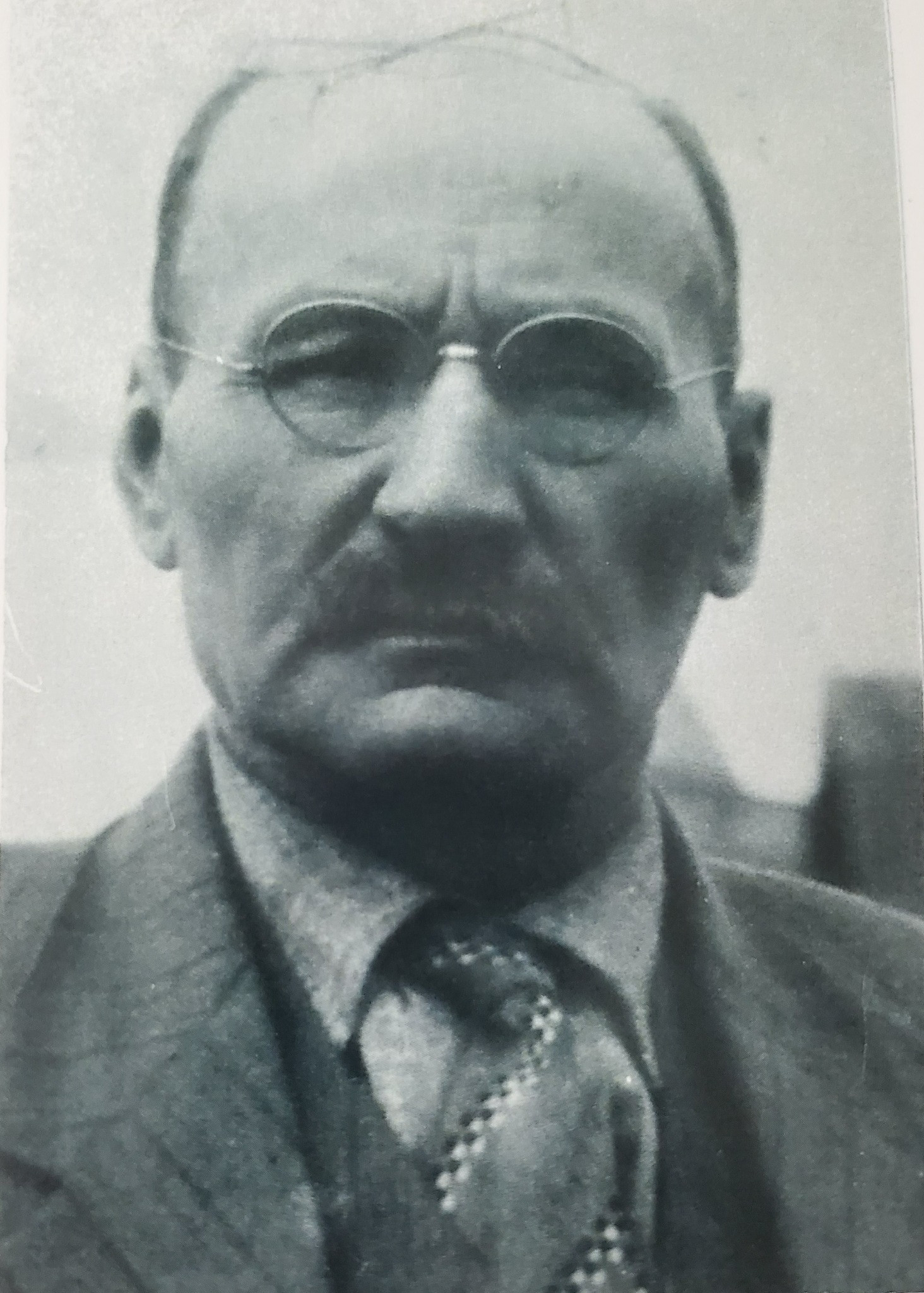
The Webbs of Paw Paw, Michigan
Frank Jay Webb
1868–1931
At harvest time, Frank Webb gave his daughter Dorothy a seven-inch stick, a basket, and a knife. Once she could judge a stalk’s length by eye, she no longer needed the stick. That small lesson, preserved by family historian Nancy E. Robinson, tells us how a Paw Paw asparagus crop began its journey to Chicago. [1]
From Paw Paw to the Chicago market
Dorothy recalled cutting asparagus before and after school in warm weather, when it grew too fast for one picking a day. Bertha sorted the stalks and tied the bunches, even dyeing the raffia blue. The family packed twelve bunches to a crate and put them on the afternoon train. In Dorothy’s account, they crossed Lake Michigan in time for the next morning’s Chicago wholesale market. [1]
The original Palmetto came from the South Carolina Lowcountry, where it was grown commercially near Charleston. New York seed firm Peter Henderson & Co. dated its introduction to 1886 and sold both seed and roots through its catalogs. By spring 1890, Palmetto was already being grown in trials at Michigan Agricultural College’s South Haven substation, where T. T. Lyon reported that it consistently outperformed the other varieties tested in size and yield. The catalogs show how growers could obtain it, but the records do not identify who first brought it to Michigan or where Frank got his stock. [11] [12] [13]
Frank’s name went to market with the crop. The Wolverine Co-operative Nursery Company’s 1908 catalog offered Webb’s Improved Palmetto, a selection from Palmetto developed over several seasons. The Courier-Northerner credited Frank with selecting it. In April 1909 the paper said it had attracted attention among Chicago dealers on South Water Street and that the Paw Paw nursery had sold 25,000 plants to a growers’ association in Texarkana, Arkansas. That was a sale of plants by the nursery, not a shipment of harvested spears by Frank. [2] [3]
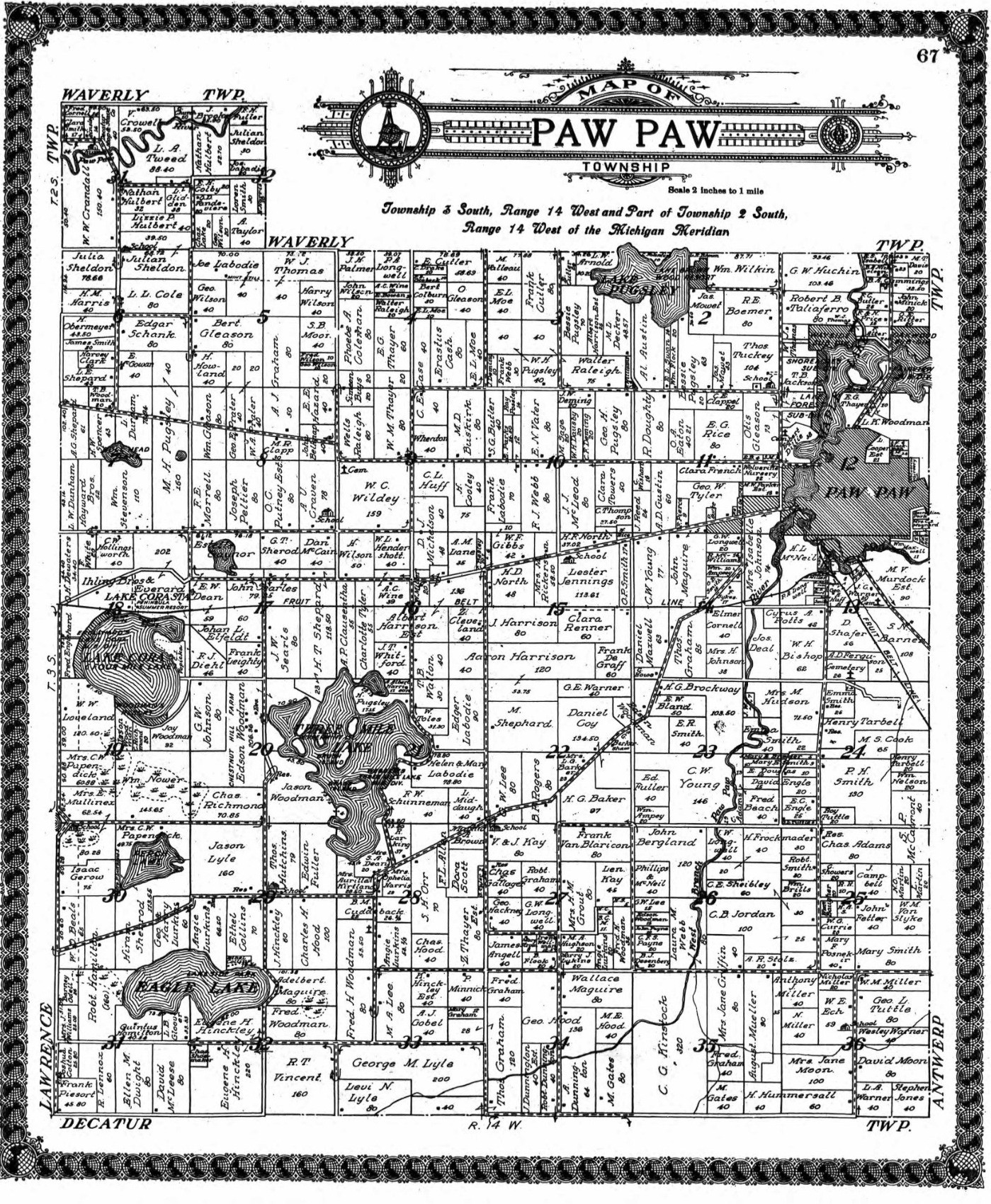
Robinson reports that Bertha’s inheritance from her grandmother helped pay for their first 30 acres and that the family moved to the farm in November 1899. The 1906 plat shows Frank on 30 acres in Section 10, and the 1912 plat shows a larger, overlapping tract. The plats do not establish the purchase dates or chain of title. Read about Bertha’s role on the farm. Asparagus brought in spring income. Robinson’s account describes tree fruit in summer and grapes in autumn, with grapes going to a nearby Welch’s factory. The county’s 1912 atlas identifies Frank as a farmer and fruit grower and labels an 80-acre tract “F. J. Webb” in section 10 of Paw Paw Township. The map locates that tract, not the vineyard or the lake cottage. The 1895 atlas shows Frank on a different tract, 120 acres in Section 26. [1] [4]
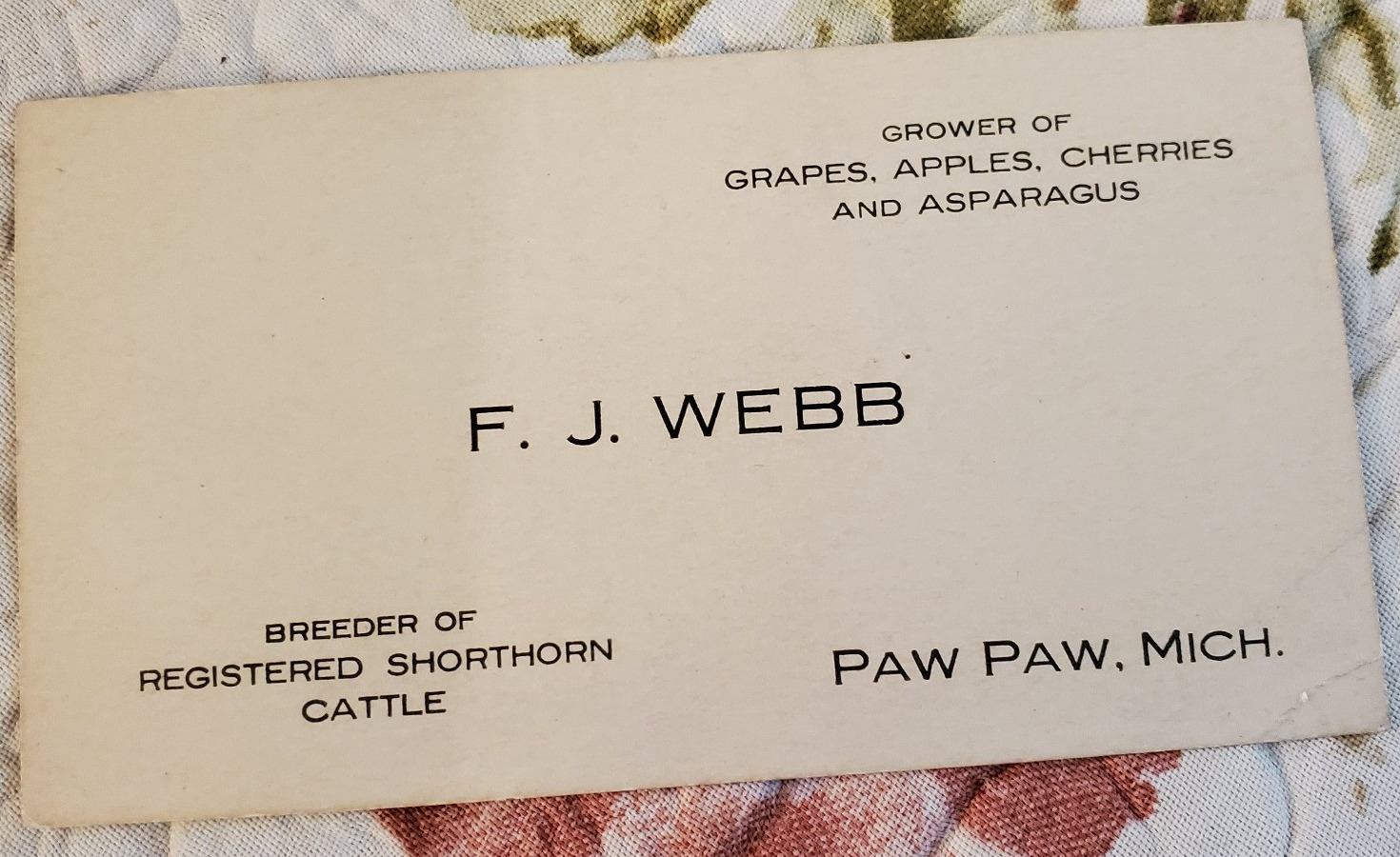
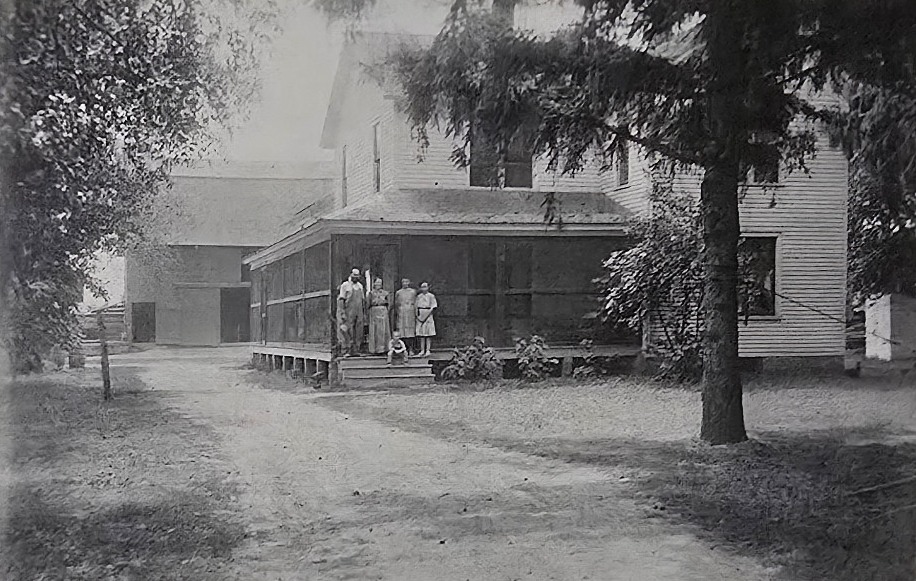
Frank and Bertha’s family
Read about their daughter Ella Grace Webb, from Paw Paw to Port Huron, New York City, and Gwynedd.
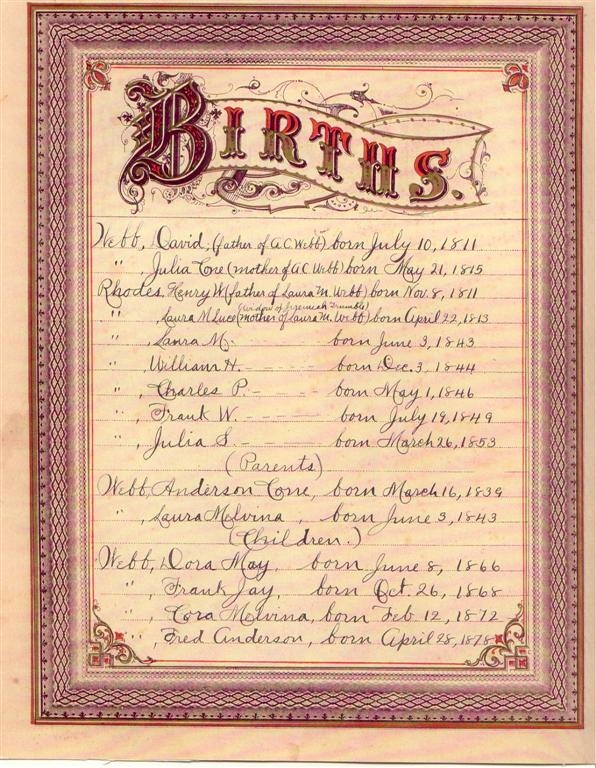
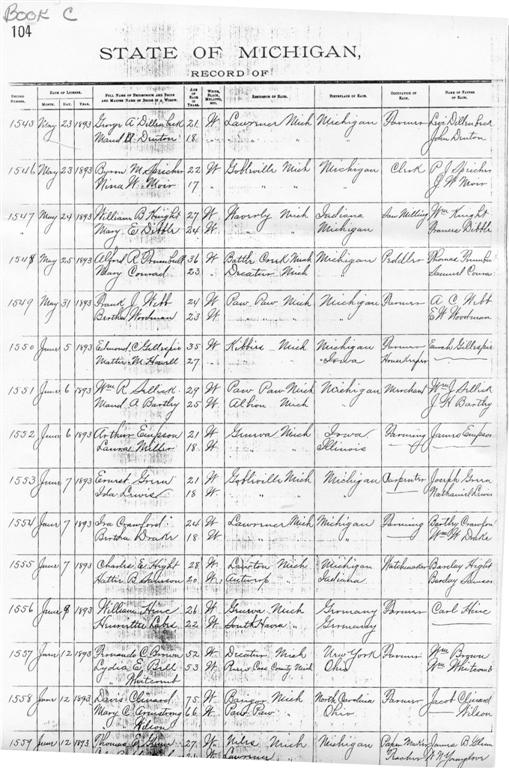
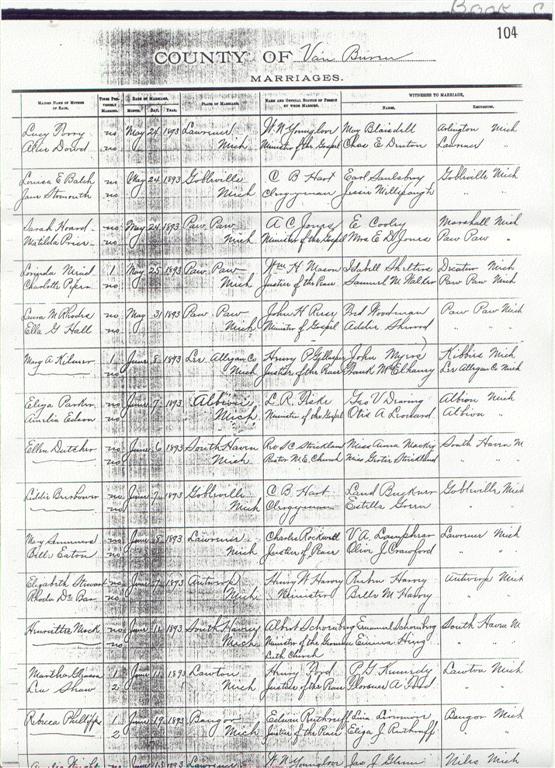
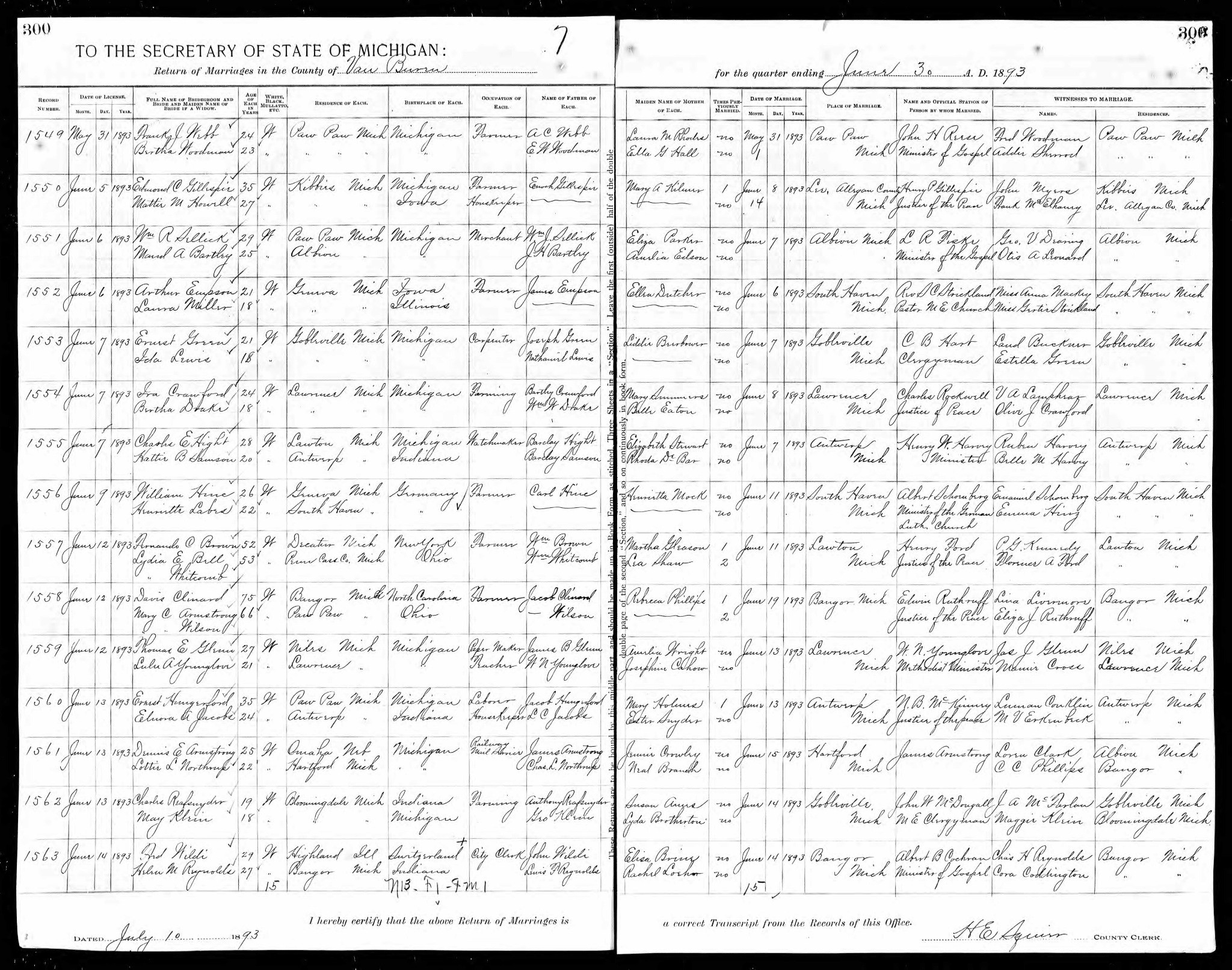
The Anderson Webb family Bible records Frank Jay’s birth on October 26, 1868, and names his parents, Anderson Cone Webb and Laura Melvina Rhodes. Through Anderson he was a grandson of David Webb and Julia Anna Cone and a nephew of Milo Cone Webb. Frank married Bertha Woodman in Paw Paw on May 31, 1893. The handwritten state return confirms the location; the Lee Township details on a later certified copy match the next couple’s entry. Compare the marriage records. The return identifies Bertha’s parents as Edson Woodman and Ella Grace Hall. Bertha’s sister Ella Winifred Woodman taught at Arthur Hill High School in Saginaw. [1] [5] [6]
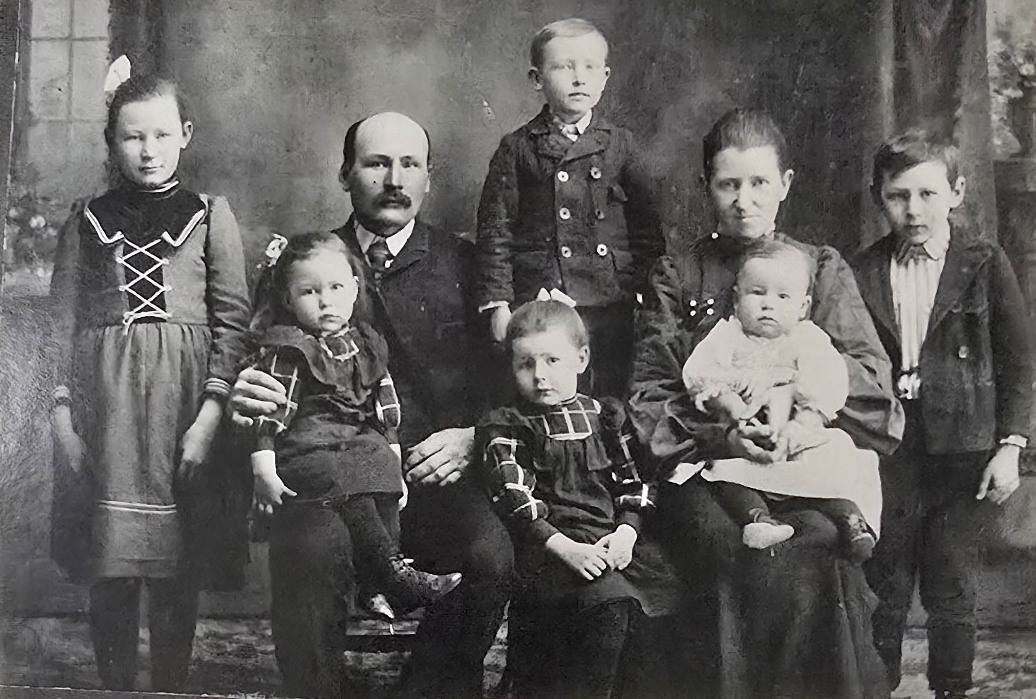
A bungalow at Three Mile Lake
The Paw Paw paper reported in August 1912 that the Webbs were staying at their new bungalow on the north shore of Three Mile Lake. Robinson’s compilation preserves a photograph captioned as the cottage when first built in 1912 and a second view dated about 1920. These are views of the lake cottage, not the farm home. [1] [7]
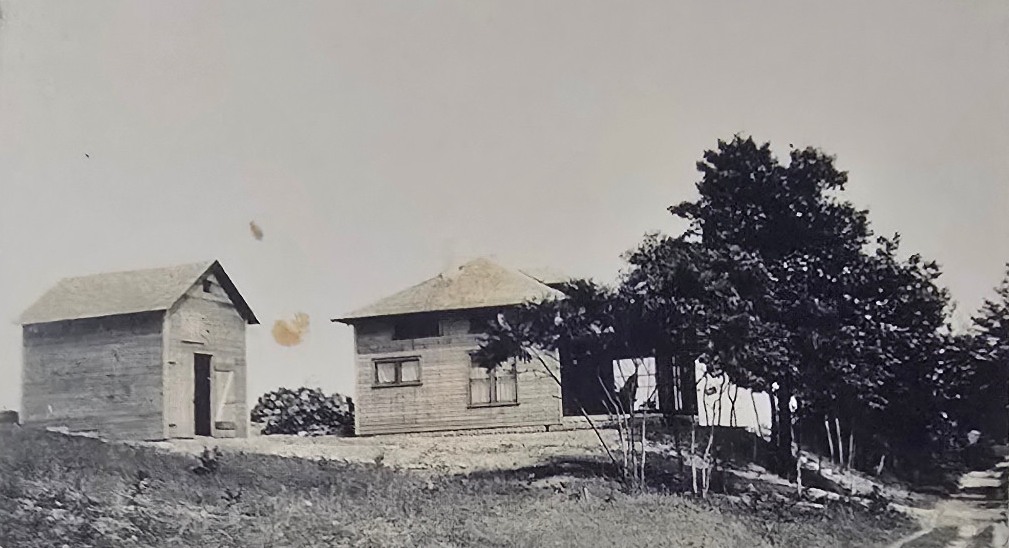
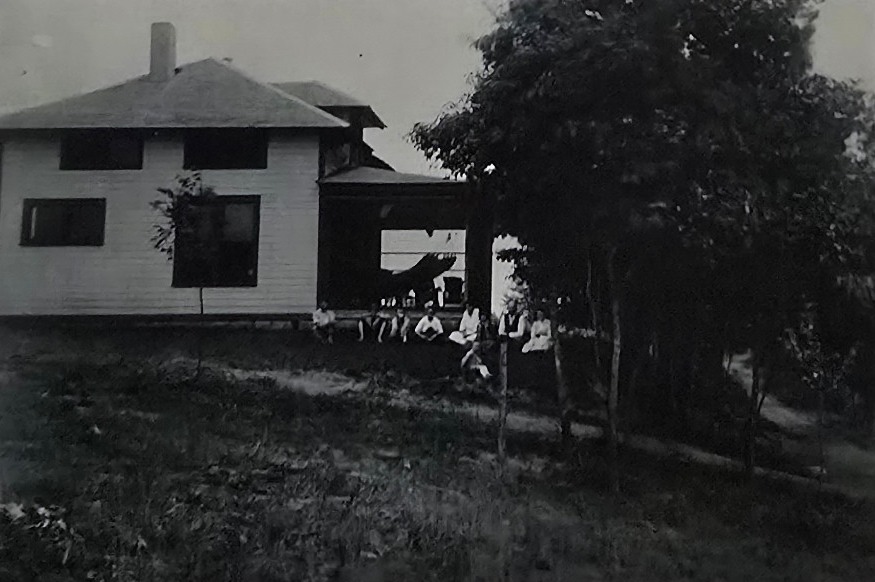
Southern winters and the farm’s next chapter
In the late 1920s Frank tried farming in Natalia, Texas. His daughter Ruth recalled that he bought land after a trip organized by the Ladd Land Company. The promise of farming through the winter did not pan out for her: the family notes say irrigation water had not reached Frank’s parcel, and Ruth returned to Michigan after a winter there. [1]
Frank died in March 1931 and was buried in Wildey Cemetery. The Benton Harbor notice reported pneumonia after his return from Florida; Robinson’s compilation and the Paw Paw obituary she transcribed instead say Texas. They also differ on the day: the Paw Paw account gives Sunday, March 15, while the March 17 Benton Harbor notice says Monday. Both obituaries report eight surviving children. The death record has not been checked here. [1] [8]
Robinson records that Bertha insisted on keeping the home farm during the Depression, recalling that her inheritance had helped pay for the original land. Their youngest son, Harry, took over farming, with help from Edwin and his family. The farm that had sent asparagus to Chicago stayed in family hands after Frank’s death. [1]
Wildey Cemetery
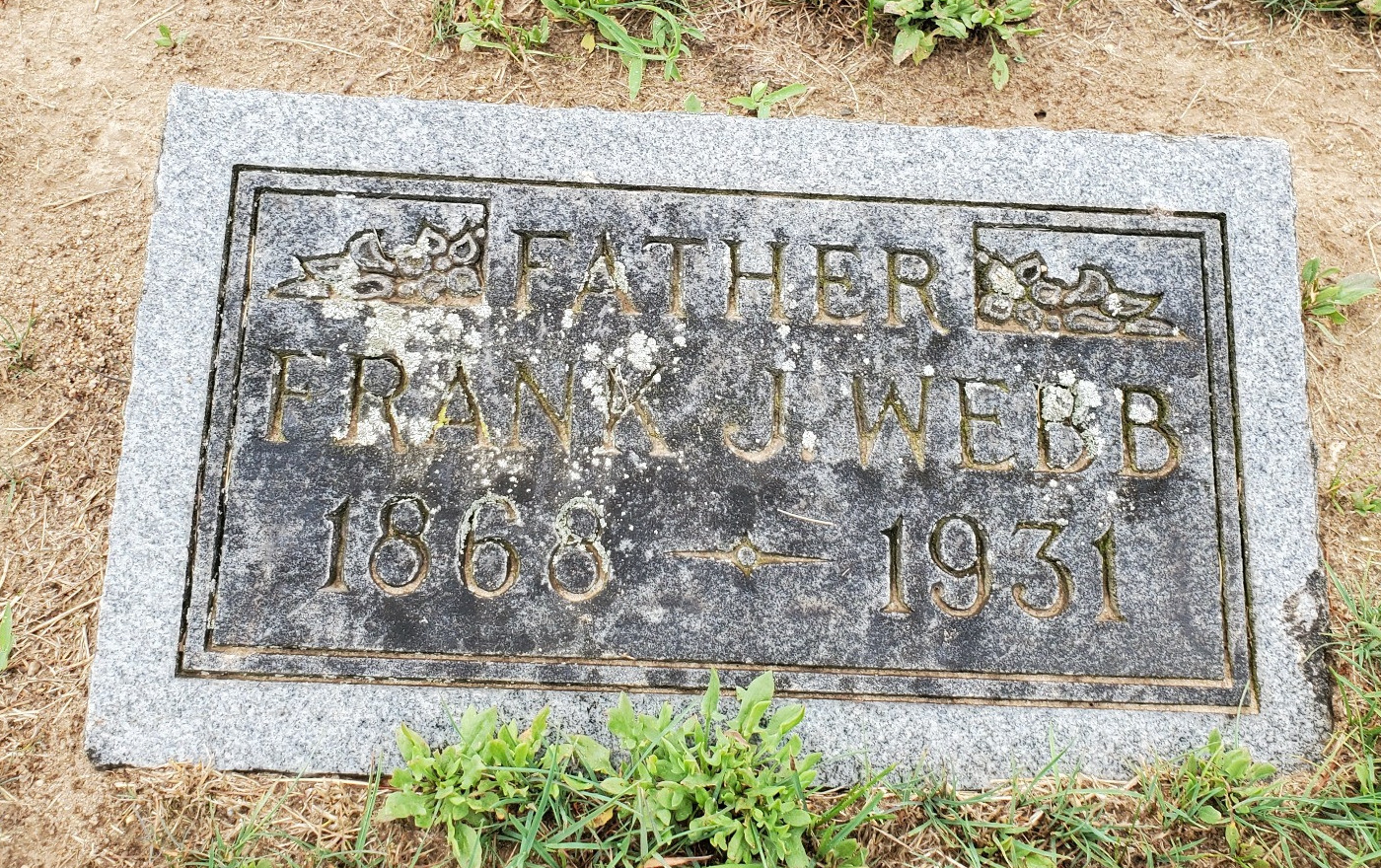
The marker is in the Webb family lot, Section D, lot 33. The township lists plot WI-00D-001-033-03. [10]
Sources and photograph credits
- Nancy E. Robinson, compiler, Notes on the Life of Bertha (Woodman) Webb, August 2008. Farm recollections of Ruth (Webb) James and Dorothy Webb; pp. 8–9 for the Texas venture, Frank’s death, and Bertha’s decision to keep the farm. The 1904 group, farm, and cottage photographs and their captions come from the same family compilation. Images shown here are details of the supplied copies, not scans from the original negatives.
- Wolverine Co-operative Nursery Company, General Catalogue (Paw Paw, 1908), printed p. 19. The catalog uses the trade name; the newspaper names Frank.
- Courier-Northerner (Paw Paw), April 16, 1909, p. 2, notice on Webb’s Improved Palmetto asparagus.
- Geo. A. Ogle & Co., Standard Atlas of Van Buren County, Michigan (1912), p. 67, Paw Paw Township plat; see also p. 95, patrons’ directory, “Webb, Frank J.” The 1906 Paw Paw Township plat labels the 30-acre Section 10 parcel. For the Section 26 tract, see Illustrated Atlas of Van Buren County, Michigan (1895), p. 33.
- Anderson Cone Webb family Bible, births page. Its retrospective entry agrees with the Benton Harbor notice (1868); the Paw Paw obituary transcription gives 1869.
- Van Buren County marriage register, book C, p. 104, entry 1549: part A and part B; 1893 county return to the Michigan Secretary of State, p. 300, entries 1549–1550.
- Courier-Northerner (Paw Paw), August 16, 1912, p. 3, bungalow notice.
- Herald-Palladium (Benton Harbor), March 17, 1931, p. 12, “Set Rites for Well Known Paw Paw Man.”
- F. J. Webb business card, Paw Paw, Michigan, undated. Family copy supplied by Mark Webb.
- Frank Jay Webb’s individual marker, Wildey Cemetery, family photograph supplied by Mark Webb; Paw Paw Township burial listing, p. 23, plot WI-00D-001-033-03.
- F. M. Hexamer, Asparagus: Its Culture for Home Use and for Market, pp. 20–21, on Palmetto and a commercial planting near Charleston; Peter Henderson & Co., Everything for the Garden (1924), dates the firm’s introduction to 1886.
- Peter Henderson & Co., Manual of Everything for the Garden (1892), listing Palmetto seed and roots for sale.
- T. T. Lyon, “Fruit Report,” Michigan Agricultural Experiment Station Bulletin 88 (December 1892), reprinted in the Annual Report of the State Horticultural Society of Michigan for 1892, pp. 144 and 170. The report identifies South Haven and dates the asparagus trial plantings to spring 1890.